CRAFT Hive Logo


Home About Safety Hub Schedule Contact  
     Workshops Resources Project Examples Tools & Equipment   

Home About Safety Hub Schedule Contact Workshops Resources Project Examples Tools & Equipment Search


This page brings together key scholarly articles and books on makerspace education, critical making, digital fabrication, and related fields. Resources are organized by theme to help you navigate the literature. Where available, links to access each article are provided.

Scholarly Resources

23 resources across 6 themes

🔧
Critical Making
Foundational texts exploring making as a critical, reflective, and interdisciplinary practice.

6 articles

Schwartz, C. (2016).

Critical making: Exploring the use of making as a generative tool.

Journal of Curriculum and Pedagogy, 13(3), 227–248.

Access article →

Johnson, E. K., & Salter, A. (2025).

Critical making in the age of AI.

Amherst College Press.

Access article →

Ratto, M., & Hertz, G. (2019).

Critical making and interdisciplinary learning: Making as a bridge between art, science, engineering and social interventions.

In The critical makers reader: (Un)learning technology (pp. 17–28).

No link available

Hertz, G. (2015).

Conversations in critical making.

CTheory, 7.

Access article →

Hermano, Ma. A. L., & Somerson, R. (2013).

The art of critical making: Rhode Island School of Design on creative practice.

John Wiley & Sons.

Access article →

Lam, K. F. T., Wang, T. H., Vun, Y. S., & Ku, N. (2019).

Using DDMT teaching model to cultivate critical thinking in a STEAM classroom.

In International Congress on Education and Technology in Sciences (pp. 47–57). Springer.

Access article →
🏫
Makerspace & Pedagogy
Research on how makerspaces function as learning environments and their pedagogical implications.

9 articles

Sheridan, K., Halverson, E. R., Litts, B., Brahms, L., Jacobs-Priebe, L., & Owens, T. (2014).

Learning in the making: A comparative case study of three makerspaces.

Harvard Educational Review, 84(4), 505–531.

Access article →

Halverson, E., & Sheridan, K. (2014).

The maker movement in education.

Harvard Educational Review, 84(4), 495–504.

Access article →

Max, A.-L., Lukas, S., & Weitzel, H. (2023).

The pedagogical makerspace: Learning opportunity and challenge for prospective teachers' growth of TPACK.

British Journal of Educational Technology, 55, 1–23.

Access article →

Koul, R. B., Sheffield, R., & McIlvenny, L. (2021).

Higher-order thinking in a makerspace.

In Teaching 21st Century Skills: Using STEM Makerspace (pp. 77–104). Springer Singapore.

Access article →

Kim, M., Markle, J., Jin, Q., & Akdemir, K. (2025).

Children's visualization and collaboration in a STEM makerspace: Opportunities for fostering sustainability awareness.

Sustainability, 17(5), 2014.

Access article →

Keune, A., & Peppler, K. (2019).

Materials‐to‐develop‐with: The making of a makerspace.

British Journal of Educational Technology, 50(1), 280–293.

Access article →

Bower, M., Stevenson, M., Falloon, G., Forbes, A., & Hatzigianni, M. (2018).

Makerspaces in primary school settings: Advancing 21st century and STEM capabilities using 3D design and printing.


Access article →

Godhe, A. L., Lilja, P., & Selwyn, N. (2019).

Making sense of making: Critical issues in the integration of maker education into schools.

Technology, Pedagogy and Education, 28(3), 317–328.

Access article →

Marshall, J. A., & Harron, J. R. (2018).

Making learners: A framework for evaluating making in STEM education.

Interdisciplinary Journal of Problem-Based Learning, 12(2).

Access article →
🖨️
Digital Fabrication & Making
Scholarship on digital tools, fabrication technologies, and their role in maker education.

3 articles

Blikstein, P. (2013).

Digital fabrication and 'making' in education: The democratization of invention.

In C. Büching & J. Walter-Herrmann (Eds.), FabLab (pp. 203–222). transcript Verlag.

Access article →

Kalelioglu, F., & Sentance, S. (2020).

Teaching with physical computing in school: The case of the Micro:bit.

Education and Information Technologies, 25(4), 2577–2603.

Access article →

Li, J., Goei, S., & Huang, R. (2024).

Unveiling maker mindsets: A journey of formation and transformation through design thinking-making pedagogy within a lesson study context.

Frontiers in Education, 9, 1343492.

Access article →
📊
Data, Making & Tangible Interaction
Works exploring data physicalization, tangible interfaces, and embodied interaction in making contexts.

2 articles

Getto, G. (2023).

Print-and-play: Data physicalization methods for research analysis in technical communication.

In Proceedings of the 41st ACM International Conference on Design of Communication (pp. 1–9). ACM.

Access article →

Hornecker, E., & Buur, J. (2006).

Getting a grip on tangible interaction: A framework on physical space and social interaction.

In Proceedings of the SIGCHI Conference on Human Factors in Computing Systems (pp. 437–446). ACM.

Access article →
✂️
Making, Identity & Craft
Explorations of craft, materiality, and identity in making and design practice.

1 article

Adamson, G. (2019).

Thinking through craft.

Bloomsbury Publishing.

No link available
📝
Assessment & Reflection in Making
Research on evaluating learning outcomes, student assessment, and reflective practice in maker education.

2 articles

Shandomo, H. M. (2010).

The role of critical reflection in teacher education.

School-University Partnerships, 4(1), 101–113.

Access article →

Ge, X., Koh, K., & Hu, L. (2024).

Assessing student learning in a guided inquiry-based maker learning environment: Knowledge representation from the expertise development perspective.

Educational Technology Research and Development, 72(1), 305–327.
Access article →

HIVE Makers Summer Camp

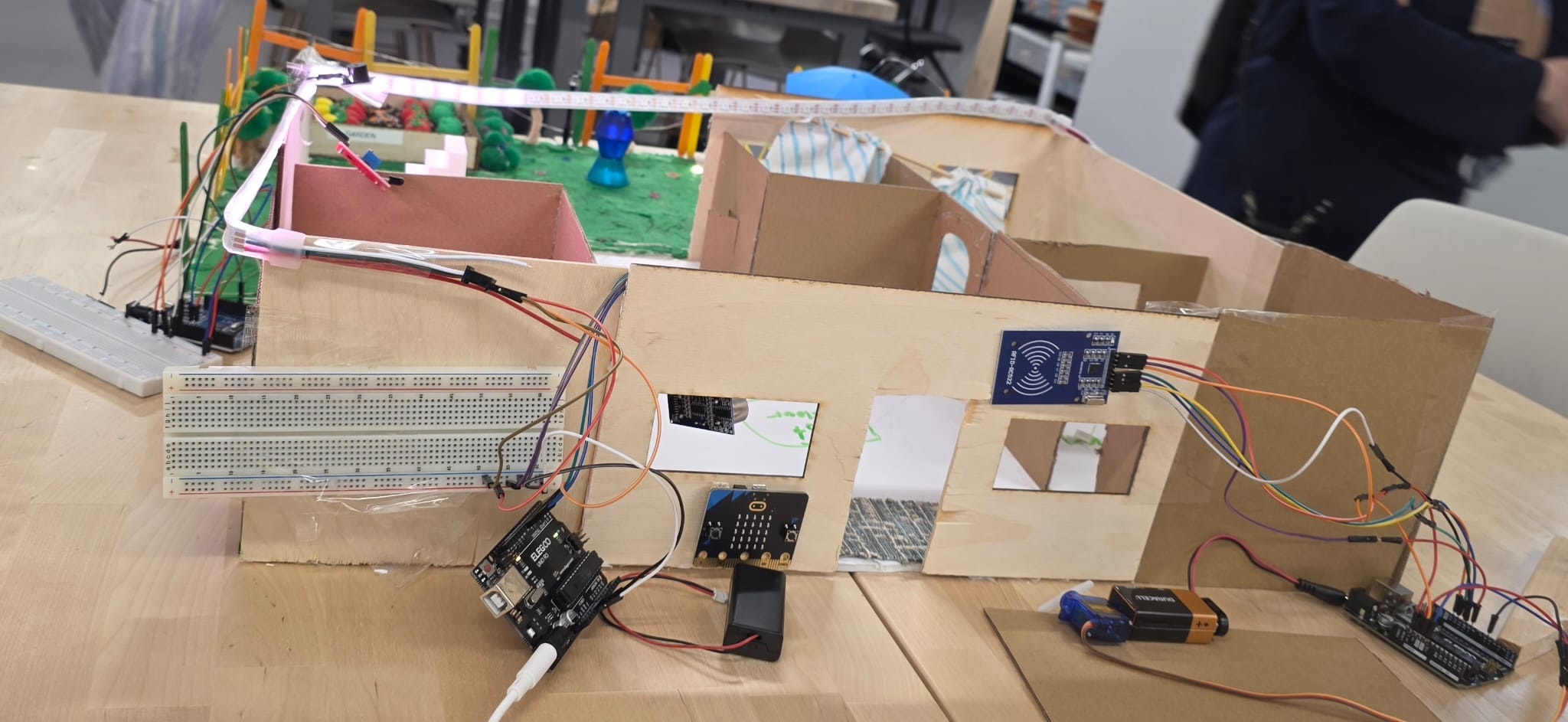
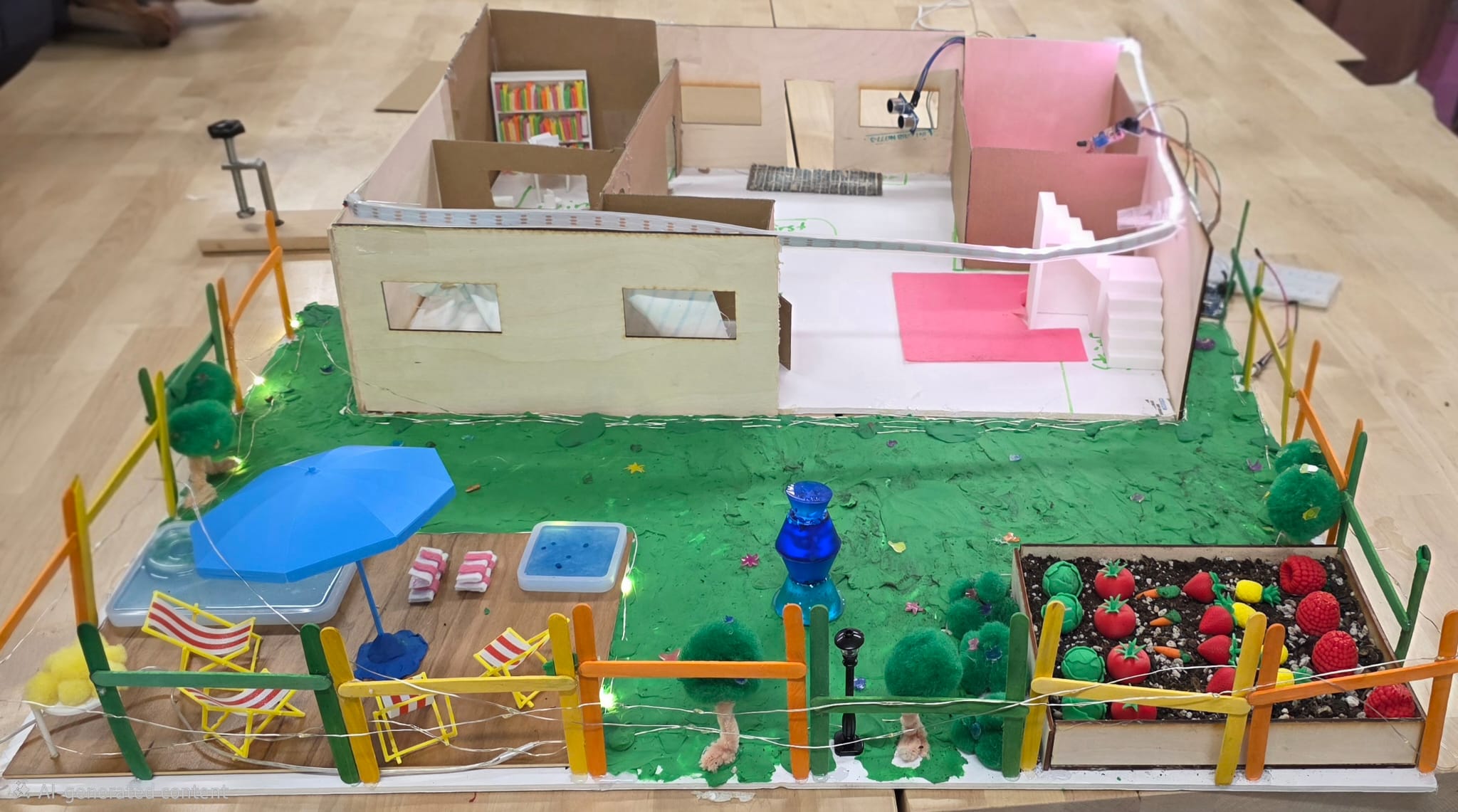
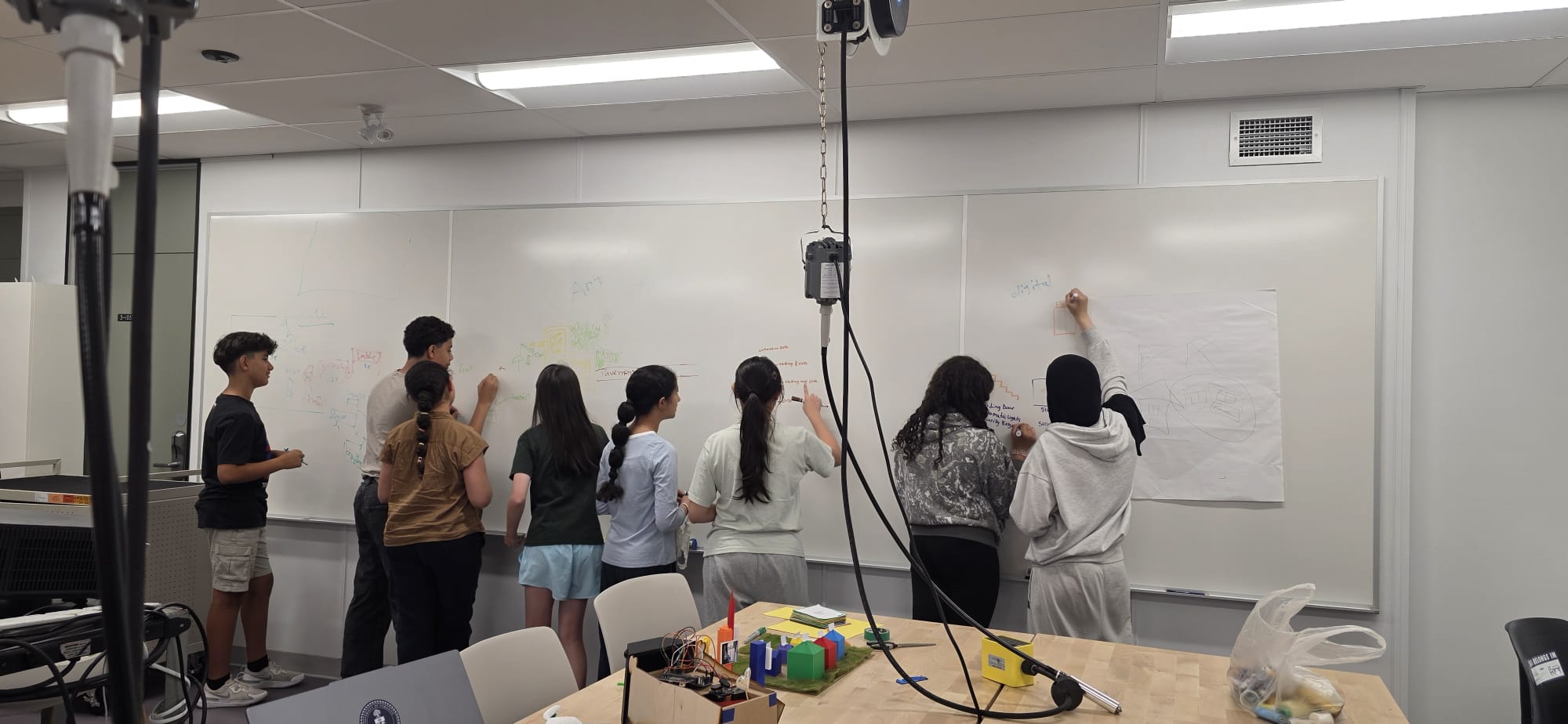
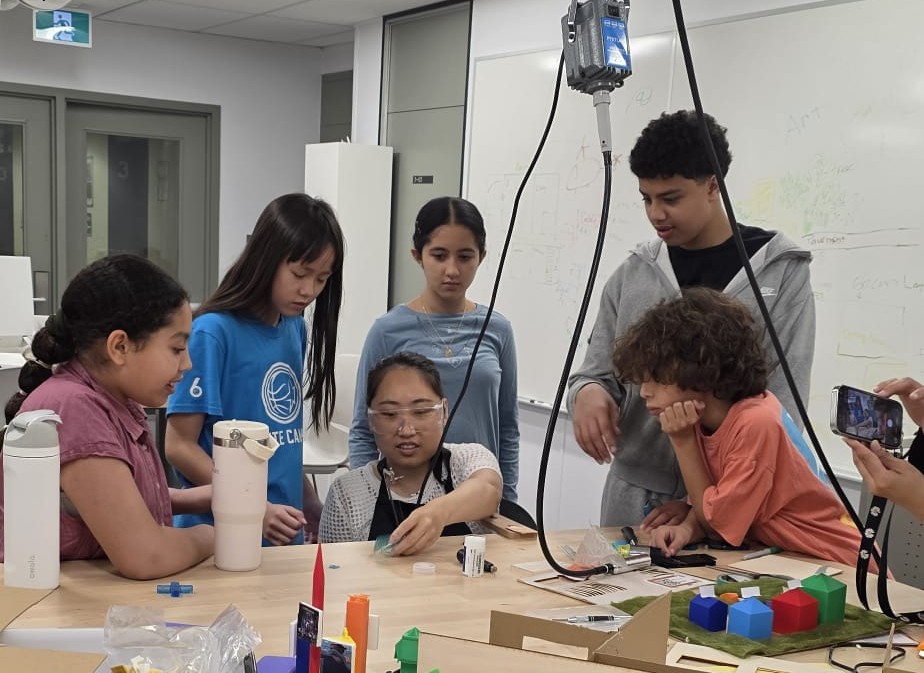
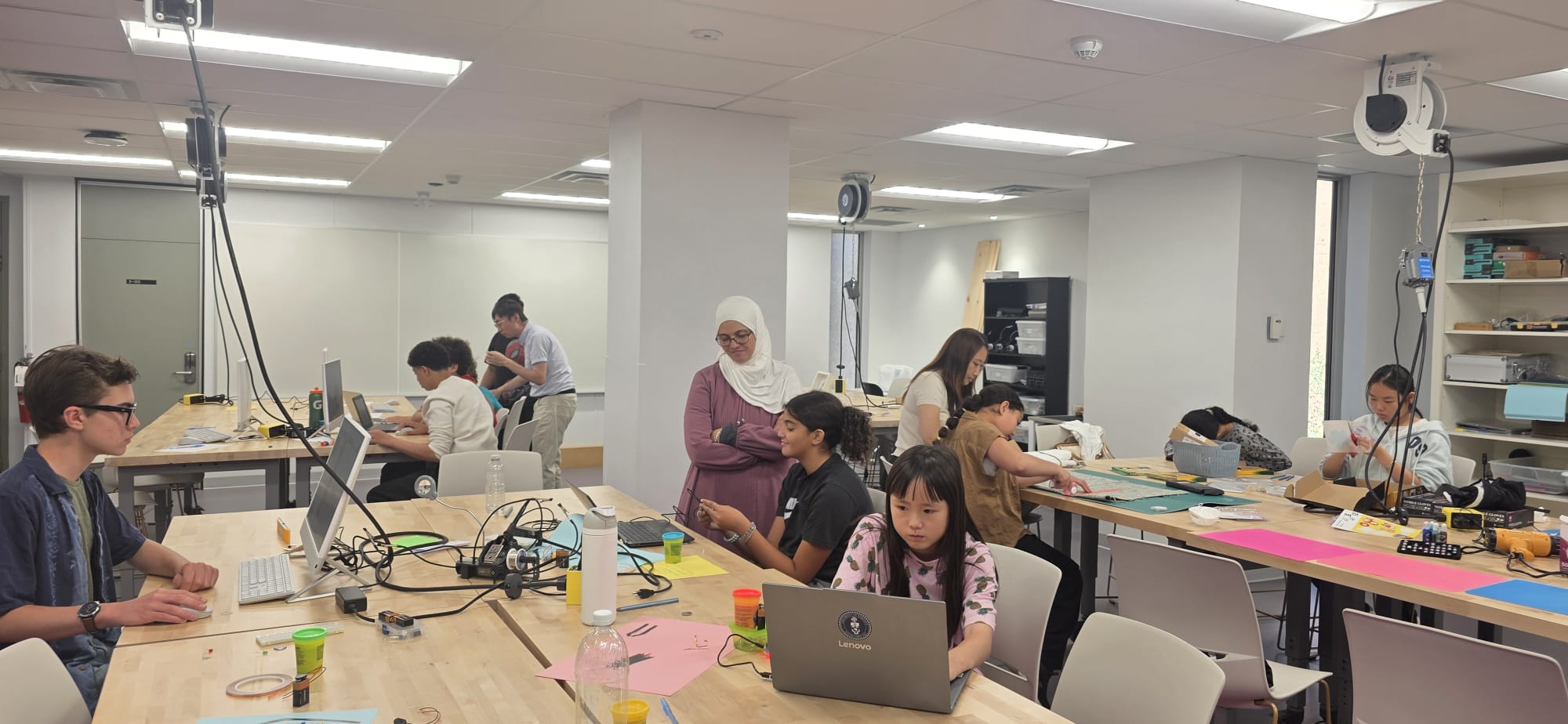
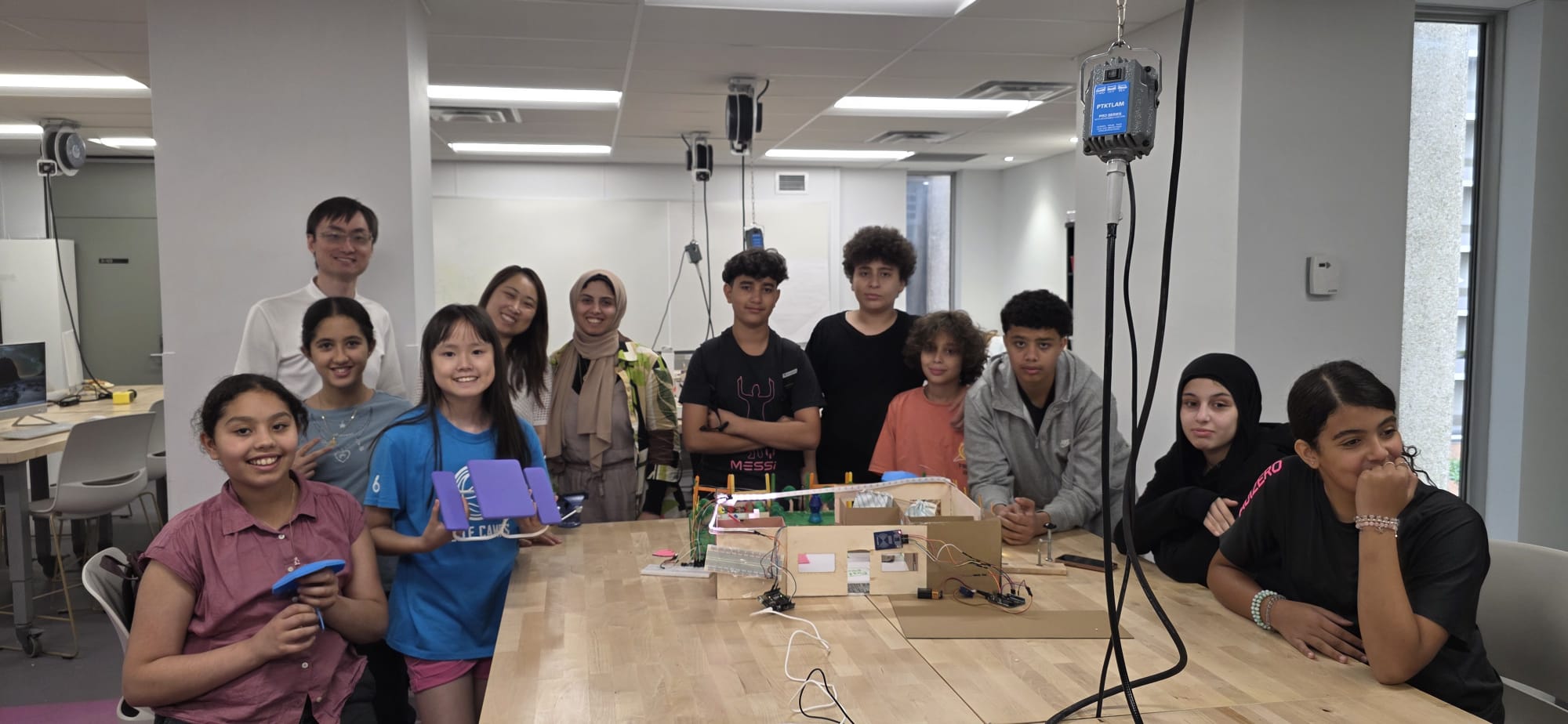
This summer, ten students in grades 5 through 11 spent a week at the OISE HIVE designing, building, and coding their way through a hands-on makerspace experience. After exploring 3D printing, laser cutting, electronics, and art-making, the group came together for an ambitious final project: a fully interactive Smart House, complete with a working door lock, motion-activated lighting, a resin-cast swimming pool, and furniture that was both hand-built and 3D printed, all designed and created entirely by the students themselves. Along the way, they learned to problem-solve, collaborate across teams, and embrace the trial-and-error spirit that lies at the heart of making.

The full group of HIVE Makers Summer Camp students and instructors together at the OISE makerspace
The students' finished interactive Smart House final project
Another view of the students' completed Smart House, showing its lighting and built features
A student sketching and planning their design on a whiteboard
Students learning how to safely use a saw to cut material
Students working together across the makerspace's different stations
OISE

Copyright © 2026 The Hive | Thinking Through Making | Ontario Institute for Studies in Education, University of Toronto